On April 14, 2026, research teams led by Prof. Meng Li and Asst. Prof. Cuijing Zhang from the Institute for Advanced Study (IAS) at Shenzhen University published a research paper titled “The near-zero-magnetic field alters microbial community structure and ecological functions in mangroves” in ISME Communications. Prof. Meng Li,Asst. Prof. Cuijing Zhang and Prof. Qinghao Song are the co-corresponding authors, and master’s student Fanyi Meng and Ph.D. student Jinye Li are co-first authors. Shenzhen University is the first affiliation and Harbin Institute of Technology as the second affiliation.
The geomagnetic field serves as a critical environmental factor in the long-term evolution of life on Earth, profoundly influencing microbial metabolic activities and community assembly. The near-zero-magnetic field (NZMF) environment, an extreme weak-magnetic condition, provides a unique window to explore the perturbation effects of magnetic field absence on microbial ecosystems. Mangrove wetlands, among the most productive coastal ecosystems globally, harbor exceptionally rich microbial diversity in their sediments, making them an ideal model for investigating magnetic field–microbe interactions. This study established a comparative experimental system between NZMF and geomagnetic field (GMF) conditions to systematically resolve the impacts of magnetic field deprivation on prokaryotic and eukaryotic microbial community structures and ecological functions in mangrove sediments.
Through high-throughput amplicon sequencing and biogeochemical index measurements of sediment samples, the study systematically compared microbial community responses under different magnetic field conditions. The results showed that the zero-magnetic field significantly altered microbial community composition in sediments, with both prokaryotic and eukaryotic community structures exhibiting sensitivity to magnetic field absence. LEfSe analysis and random forest models further identified key differential taxa between treatment groups, indicating that NZMF selectively enriched or suppressed specific functional microbial taxa.
At the ecological function level, NZMF treatment significantly influenced sediment nutrient cycling and extracellular enzyme activities (EEAs). Molecular ecological network analysis revealed that the zero-magnetic field weakened interaction intensities among microbial taxa and altered the network topological roles of key functional groups such as methanogens and iron-cycling bacteria. Furthermore, correlation analysis between ecological function parameters and dominant microbial taxa indicated that magnetic field absence indirectly regulated sediment carbon, nitrogen, and phosphorus cycling functions by reshaping community structure.
This study, for the first time, systematically elucidated the perturbation effects of near-zero-magnetic field on microbial ecosystems in mangrove sediments from dual perspectives of community structure and ecological function. It provides experimental evidence for understanding the vital role of the geomagnetic field in maintaining microbial ecological stability in coastal wetlands, and expands our knowledge of microbe–environment interaction mechanisms under extreme weak-magnetic environments.
This work was supported by the Shenzhen University Special Project (Zero-Magnetic Biology Special Project),National Natural Science Foundation of China, the Guangdong Basic and Applied Basic Research Foundation, and the Synthetic Biology Research Center of Shenzhen University.
Article: https://doi.org/10.1093/ismeco/ycag098
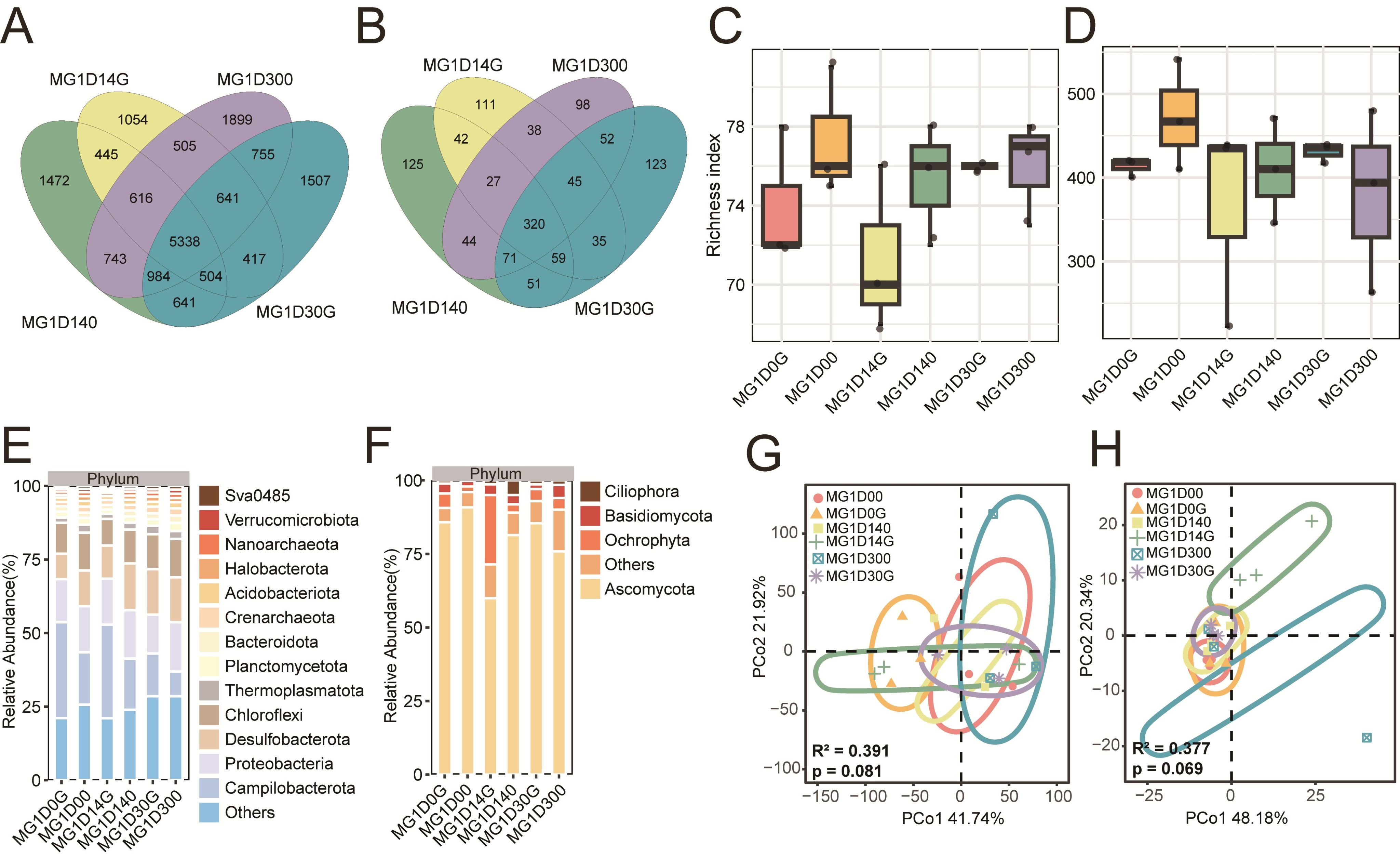
Figure 1. Mangrove microbial community structure under different magnetic fields.



