On July 30, 2026, Prof. Meng Li's team from the Institute of Advanced Study (IAS) of Shenzhen University published a paper titled "Expansion of the Asgard archaeal virome and defensome provides insights into virus-host interactions" in the journal Microbiome. Prof. Meng Li from the IAS is the corresponding author. Chengxiang Gu is the first author, and Shenzhen University is the first affiliation.
Asgard archaea, broadly considered as a group of archaea that exhibit the closest evolutionary relationship with eukaryotes, encode diverse defense systems and are infected by distinct viruses. However, the diversity of Asgard archaeal viruses and their interactions with the hosts remain poorly explored.
Here, using CRISPR spacer-protospacer matching, 23 viruses were predicted associated with Asgard archaea from various habitats. Apart from clusters with known viruses, three previously undescribed groups of Asgard viruses were reported with predicted head-tailed virions of the realm Duplodnaviria and filamentous virions characteristic of the archaea-specific realm Adnaviria. Mapping of metagenomic reads to viral and host genomes suggested that most Asgard viruses display relatively low virus-to-host ratios, typically below 10. In addition, the known defensome of Asgard archaea was expanded, among others, detecting putative PARIS and Prometheus defense systems. Finally, the diversity of anti-defense proteins and putative archaeal type IV pilins encoded by some Asgard viruses provide additional insights into the interactions between Asgard archaea and their viruses. Overall, this work sheds new light on the Asgard archaeal virome and defensome, and virus-host interactions.
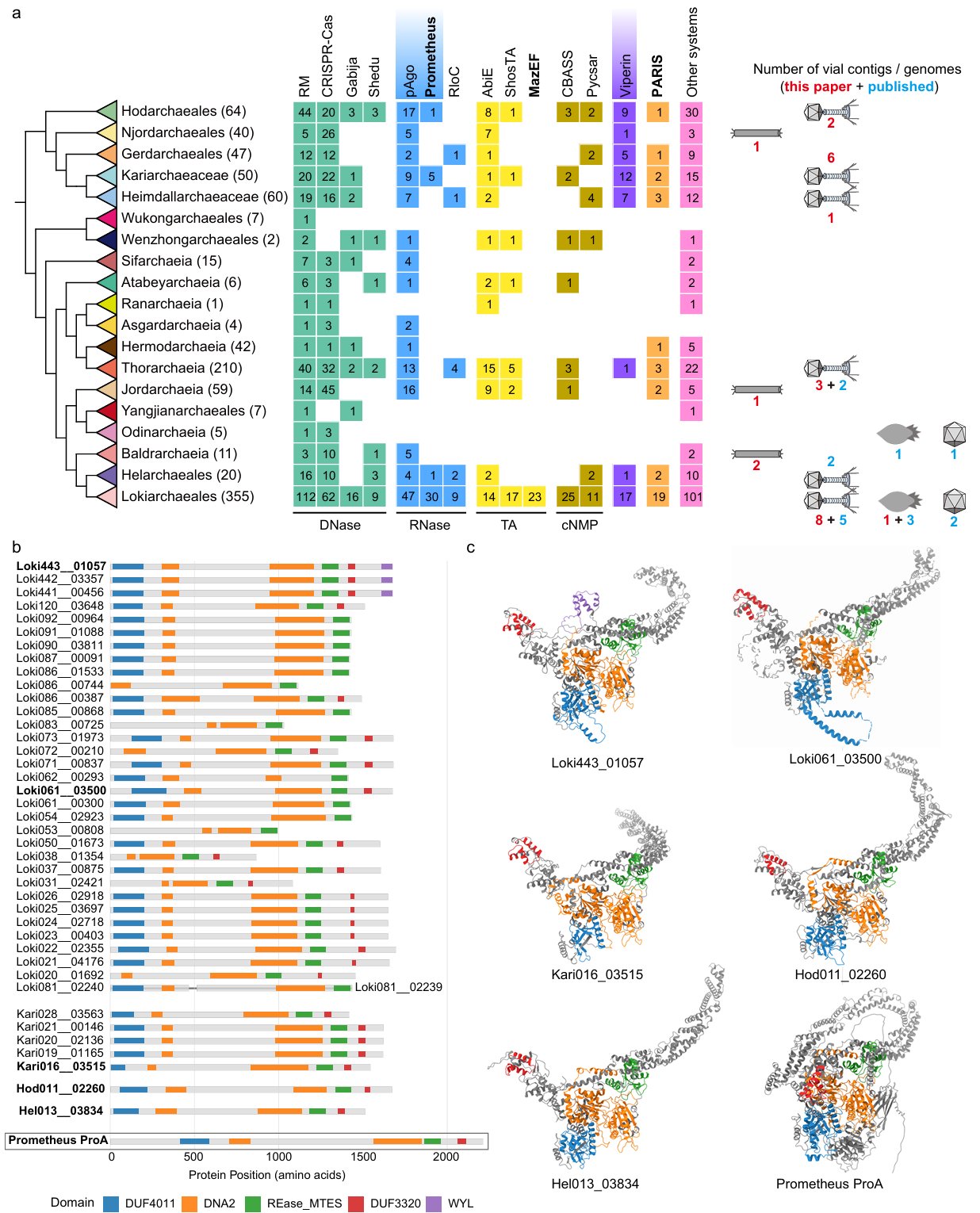
Figure 1. The types of viruses and defense systems of Asgard archaea
This work was supported by National Key Research and Development Program of China, National Natural Science Foundation of China, Guangdong Major Project of Basic and Applied Basic Research, Shenzhen Science and Technology Program, Shenzhen University 2035 Program for Excellent Research, and the research fund from Synthetic Biology Research Center of Shenzhen University.
Article link:https://doi.org/10.1186/s40168-026-02481-y



