Zheng Wang and collaborators report a coordination-induced orbital polarization framework in Inorganic Chemistry
Why do different palladium catalysts favor different reaction pathways and sites on the same type of substrate? A study led by Research Professor Zheng Wang at the Institute for Advanced Study, Shenzhen University, offers an electronic-structure explanation. The team proposes a coordination-induced orbital polarization (CIOP) framework to explain how palladium coordination reshapes the frontier orbitals of 1,3-enynes and relates these changes to activation mode selection and regioselectivity. The work was published online in Inorganic Chemistry, a journal included in the Nature Index, on October 15, 2026.
The 1,4-hydrofunctionalization of 1,3-enynes builds an allene skeleton while introducing a functional group in a single step. This makes it an efficient, atom-economical route to multisubstituted allenes. Yet the differences in activation modes and regioselectivity observed across palladium catalytic systems have lacked a common mechanistic explanation.
The CIOP framework connects these differences to the electronic response of the substrate upon metal coordination. By examining the conjugated enyne π-system in different palladium coordination environments, the researchers found distinct, site-dependent redistributions of frontier-orbital character. These changes alter the electronic properties of individual reaction sites, providing a basis for understanding why particular activation modes and reaction sites are favored.
The team examined this interpretation using density functional theory calculations of palladium-catalyzed hydroboration, hydroamination, and hydrosilylation. In all three reaction classes, the calculated orbital polarization patterns were consistent with the preferred reaction pathways and experimentally reported regioselectivities. The results support CIOP as a common interpretative framework for the reactions studied, linking metal coordination to substrate electronic structure and catalytic selectivity. This perspective may help guide further mechanistic investigations and the design of synthetic routes to functionalized allenes.
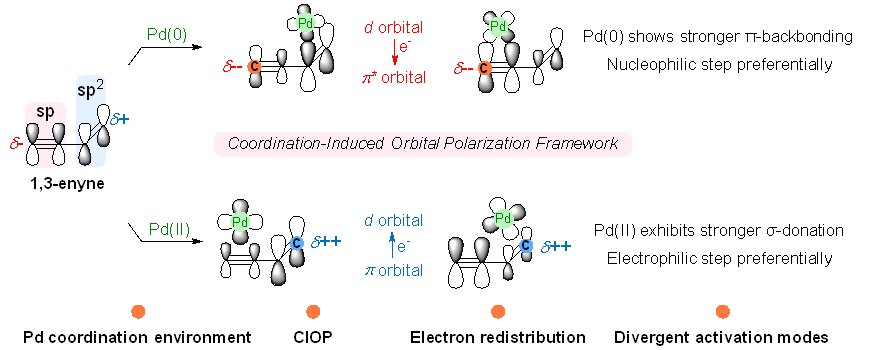
Figure 1. The coordination-induced orbital polarization (CIOP) framework.
Research Professor Tilong Yang of Shenzhen University, Professor Zhihui Shao of Yunnan University, and Research Professor Zheng Wang are the co-corresponding authors. Postdoctoral researcher Shan Wang is the first author, and undergraduate student Kaiqi Huang is the second author. The Institute for Advanced Study at Shenzhen University is the first-listed affiliation.
The research was supported by the National Natural Science Foundation of China, the Natural Science Foundation of Guangdong Province, the Natural Science Foundation of Shenzhen, start-up funding for young scholars at Shenzhen University, and the Natural Science Foundation of Yunnan Precious Metals Laboratory. The Supercomputing Center of Shenzhen University provided computational support.
Publication
Wang, S.; Huang, K.; Yang, T.; Shao, Z.; Wang, Z. Mechanistic Insights into Palladium-Catalyzed 1,4-Hydrofunctionalization of 1,3-Enynes through a Coordination-Induced Orbital Polarization Framework. Inorganic Chemistry 2026, 65 (42), 24836–24847.
https://doi.org/10.1021/acs.inorgchem.6c03742



