Professor Shern-Long Lee's group published a comprehensive review titled “Materials Interface Engineering: Impact of Interfacial Molecular Orientation on Organic Electronic Devices” in Advanced Functional Materials. This review presents an in-depth analysis of recent progress in understanding the role of molecular orientation at interfaces, emphasizing its critical influence on the performance of organic electronic devices. The review highlights the essential mechanisms by which molecular alignment such as face-on or edge-on orientations dictates charge transport pathways, energy-level alignment, and light absorption efficiency. Beyond fundamental principles, the work draws particular attention to the transformative potential of precise electrode interfacial engineering, utilizing strategies like self-assembled monolayers (SAMs) to optimize performance of electronic devices. Ph.D. student Attia Shaheen from Shenzhen University is listed as the first author, and Professor Shern-Long Lee and Haibing Xie and are the corresponding authors. Collaborators include Nadia Anwar, Fang Chen, and Yue Chan from IAS.
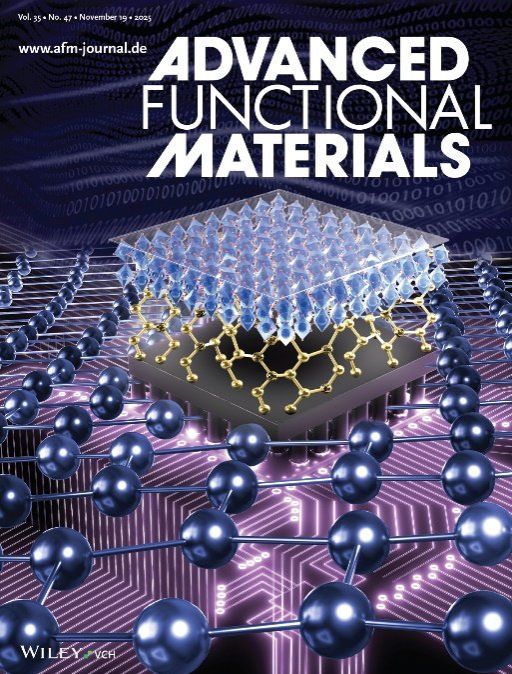
Figure 1. Cover of the work in Advanced Functional Materials.
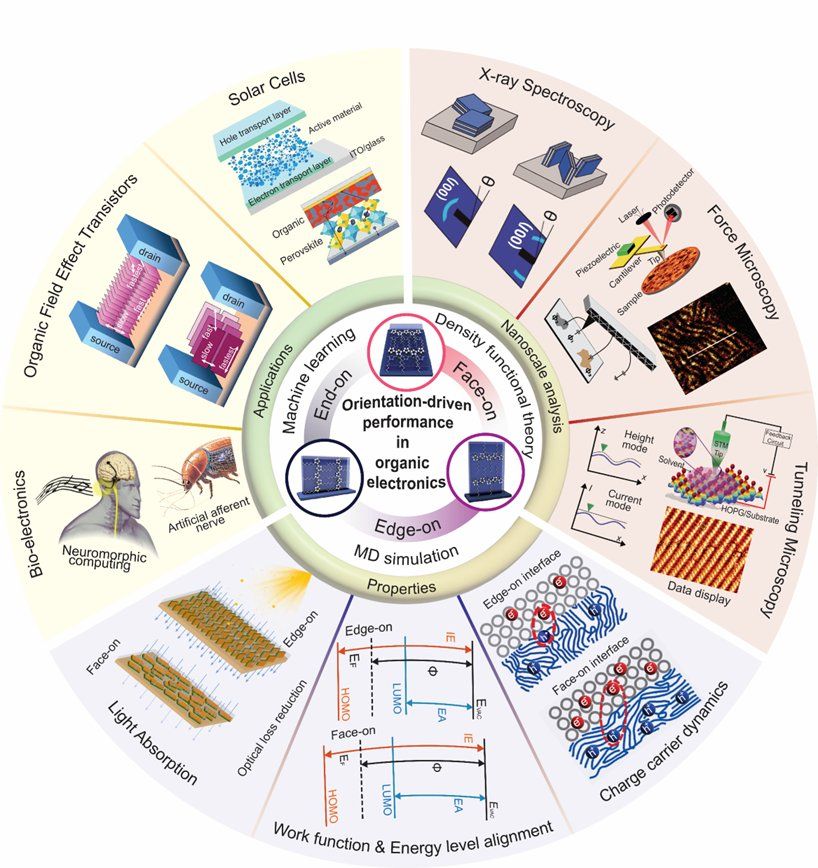
Figure 2. Insight into molecular orientations and their influence on optical and electronic properties of organic-based materials.
Molecular orientation serves as a fundamental determinant in the efficiency of organic solar cells (OSCs), field-effect transistors (OFETs), and bio-electronic devices. The review examines the intricate interplay between molecular orientation and structural order, detailing the probing of these features using advanced techniques like scanning probe microscopy (SPM), and kelvin probe force microscopy (KPFM). Furthermore, the integration of emerging computational tools, including machine learning (ML) and multiscale simulations, is identified as a key enabler for the predictive design of molecular configurations. These insights underscore the complexity of interface physics and the necessity for multidisciplinary approaches combining synthetic innovation, experimental characterization, and computational modeling to advance organic electronics toward practical, high-performance applications. This research was supported by the Guangdong Basic and Applied Basic Research Foundation (2024A1515010482) and the Nanotechnology Graduate Course funding by Shenzhen University.
Original article link: https://doi.org/10.1002/adfm.202505173

Prof. Haibing Xie obtained his PhD in 2016 from the University of Barcelona and Catalonia Institute for Energy Research (IREC). Then he continued postdoctoral research at the Catalan Institute of Nanoscience and Nanotechnology (ICN2). His work involved investigating the mechanisms underlying the efficiency and stability of halide perovskite solar cells, aiming to enhance their performance and longevity. Currently, he is a researcher at the Institute for Advanced Study, Shenzhen University. His research continues to make significant contributions to the understanding and development of high-efficiency photovoltaic devices, advancing the performance and stability of perovskite materials, and optimizing their application in renewable energy technologies.

Prof. Shern-Long Lee earned his PhD in Chemistry from National Taiwan University 2009. He did postdoctoral research in National Taiwan University and Belgium at KU Leuven (Marie Curie Fellow). His postdoctoral research involved innovative techniques in scanning probe microscopy to manipulate molecular interactions at the nanoscale, advancing the understanding of complex interfacial phenomena. Currently, he is a researcher at the Institute for Advanced Study at Shenzhen University. His work continues to explore the intricate relationship between molecular self-assembly and surface phenomena, with particular emphasis on the control of molecular orientation at interfaces for advanced applications in organic electronics.



