On February 6, 2026, the team of Associate Professor Xu Tailin and Associate Professor Gao Ying from Shenzhen University published a research paper titled "Fully Integrated AI-Enhanced Flexible Wearable Sensor for Real-Time Movement Evaluation and Table Tennis Training" in the biosensor journal Biosensors and Bioelectronics. The study reports a thin, skin-conformal, fully integrated flexible inertial sensing platform capable of precise human motion capture and spatiotemporal movement assessment, offering an innovative intelligent solution for sports training, rehabilitation medicine, and human-computer interaction. Associate Professor Xu Tailin and Associate Professor Gao Ying serve as co-corresponding authors, master's student Wang Qinliang is the first author, and Shenzhen University is the sole affiliated institution.
Wearable electronic devices hold great promise for continuous health monitoring and human-computer interaction; however, existing products struggle to simultaneously achieve high system integration, flexibility and skin conformability, and high-fidelity biomechanical assessment accuracy. To address these challenges, the research team developed a skin-conformal flexible inertial sensing platform. The platform integrates high-precision micro-electromechanical systems (MEMS) inertial sensors onto a customized flexible printed circuit board, encapsulated within a medical-grade adhesive patch for direct epidermal mounting. The standalone device supports low-power wireless transmission, achieving static angular errors below 0.14° and dynamic drift of only 6.21° during continuous motion, demonstrating outstanding measurement precision. On the algorithmic side, the team innovatively introduced limited dynamic time warping (LDTW) and multiple sequence alignment (MAFFT) to construct a spatiotemporal assessment framework that decouples spatial posture accuracy from temporal execution order. Based on 60 expert demonstrations of table tennis forehand attacks, evaluation models were established with a maximum spatial tolerance of 7.39° and 14 consensus temporal landmarks. The sensor network achieved an overall RMSE of 11.54 ± 8.46° against optical motion capture systems. In a training validation study involving 20 volunteers, novice athletes using automated sensor-based guidance achieved a 41.67% improvement in movement quality, a result not statistically different from that of expert coaching (55.75%, p = 0.175). In addition, the platform demonstrated high-accuracy action recognition at 99.86% and real-time movement assessment.
This research was supported by the Shenzhen Science and Technology Program.
Paper link:https://doi.org/10.1016/j.bios.2026.118500
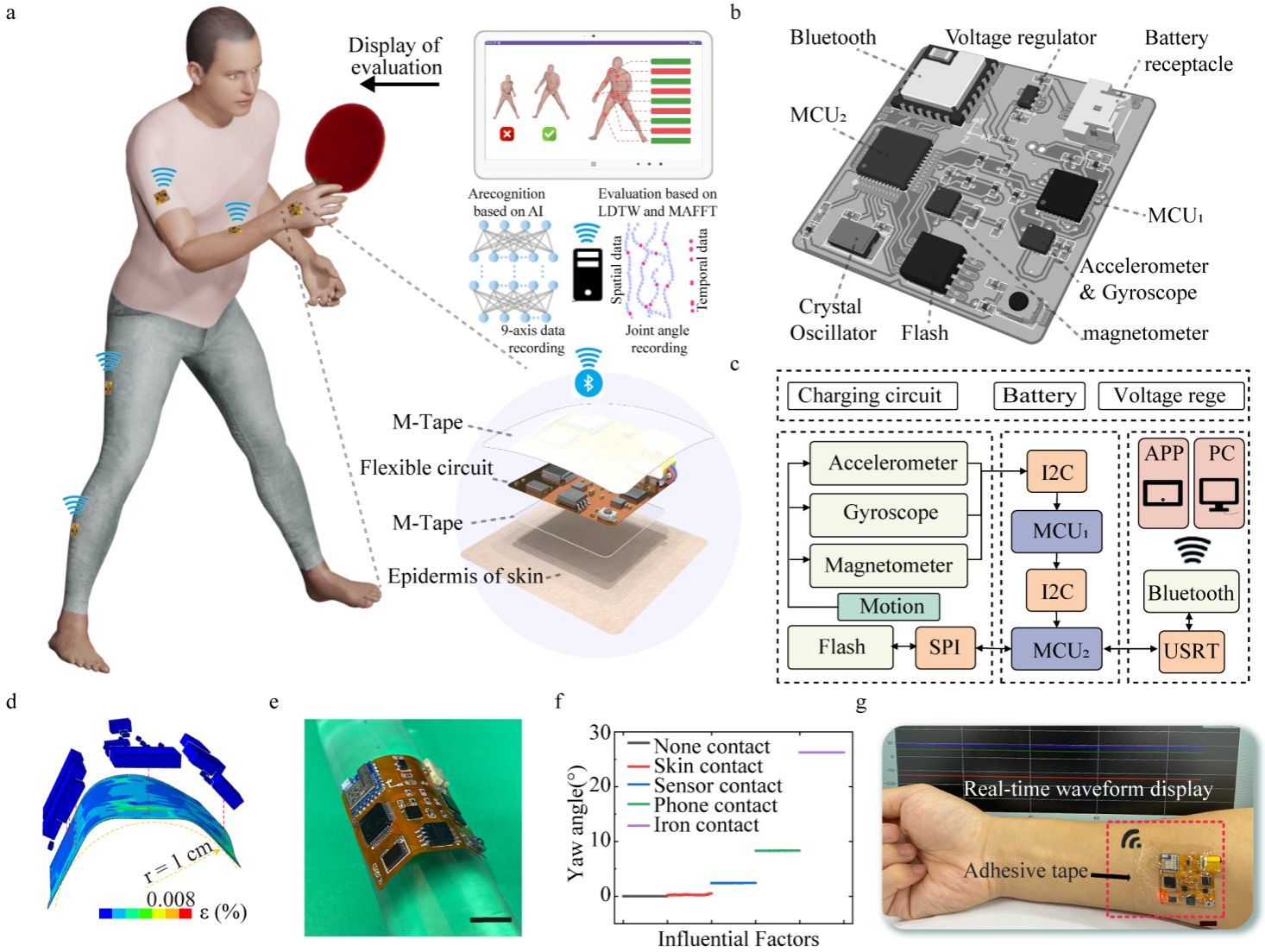
Fig. 1. Overview of a standalone flexible inertial sensor patch.



