On July 14, 2026, Professor Meng Li's research team from the Institute for Advanced Study, Shenzhen University published a comprehensive review entitled "On the timing of eukaryotic origin" in Biological Reviews. Shenzhen University is the primary affiliation of the study. Associate Research Fellow Ning Song is the first author, Professor Meng Li is the corresponding author, and Dr. Ke Pang from the Nanjing Institute of Geology and Palaeontology, Chinese Academy of Sciences, together with Associate Research Fellow Xiaoyuan Feng from the Institute for Advanced Study, Shenzhen University, also contributed to this work.
The origin of eukaryotes represents one of the most fundamental and enduring questions in evolutionary biology. Distinguished by the presence of a nucleus, mitochondria, and an elaborate endomembrane system, eukaryotic cells mark a pivotal transition from simple prokaryotic life to complex cellular organization. However, when eukaryotes first emerged and how this evolutionary transition unfolded remain matters of active debate. Multiple lines of evidence—including the fossil record, sterane biomarkers, molecular clock analyses, phylogenetic reconstructions, and the history of Earth's oxygenation—often suggest markedly different evolutionary timelines, making the origin of eukaryotes a central topic in evolutionary biology and Earth-life sciences.
In this review, the authors systematically synthesize recent advances from paleontology, geochemistry, phylogenomics, lipid biology, molecular dating, and microbiology to provide a comprehensive overview of current research on the timing of eukaryotic origins. The review critically compares chronological evidence derived from fossils, sterane biomarkers, and molecular clocks, while discussing major unresolved questions concerning the evolutionary relationship between archaea and eukaryotes, the timing of mitochondrial acquisition, atmospheric oxygenation, and cyanobacterial evolution. It also evaluates competing hypotheses for eukaryogenesis—including the two-domain (2D), three-domain (3D), and one-domain (1D) models—and highlights emerging evidence suggesting that giant DNA viruses may have contributed to the evolution of eukaryotic cellular complexity.
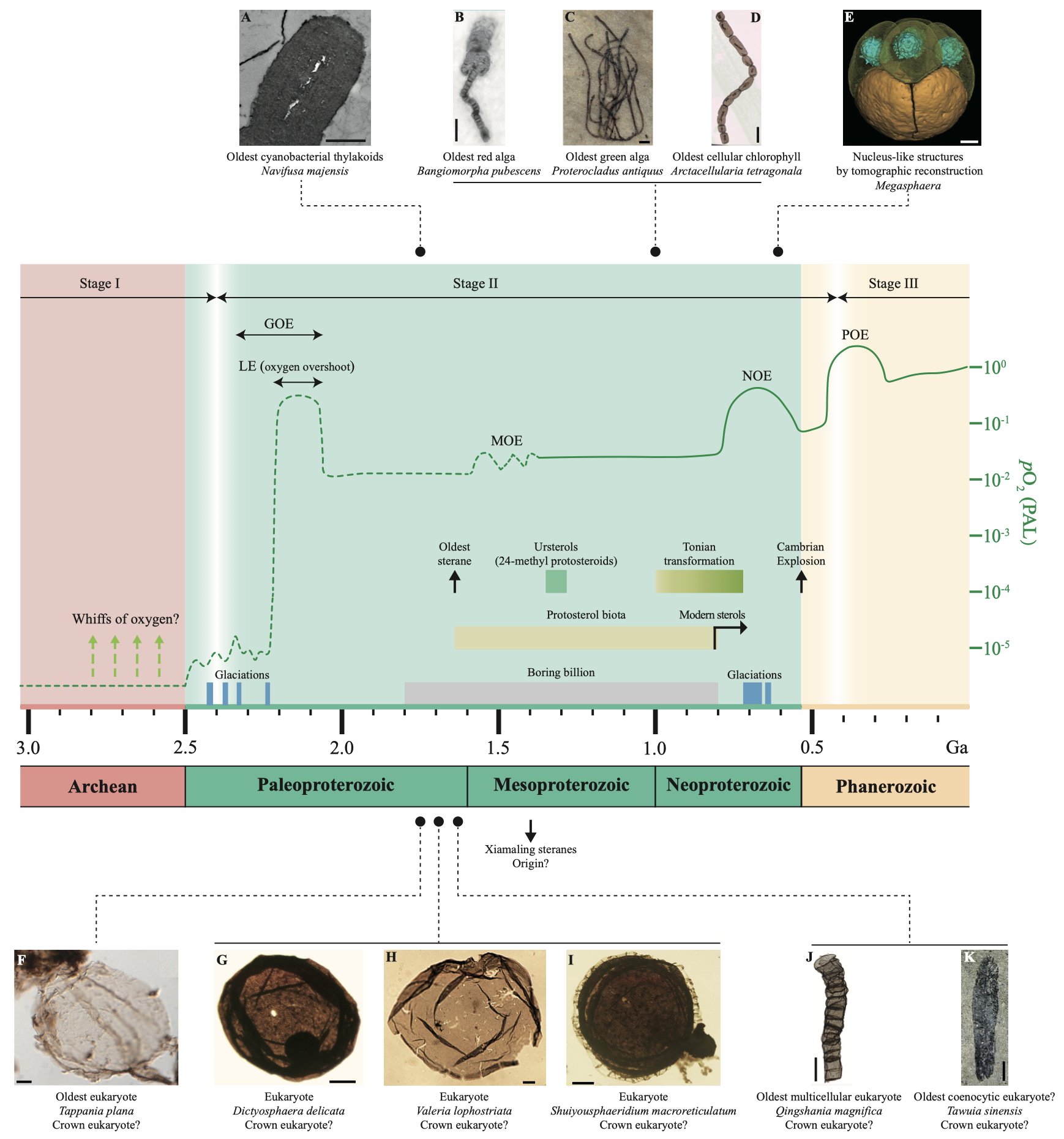
Figure 1. Schematic timeline of early eukaryotic evolution
Building on this synthesis, the authors propose a fossil-centered, multidisciplinary framework for future studies of early eukaryotic evolution. The framework advocates integrating systematic microfossil identification, continuous stratigraphic sampling, and subcellular-scale multi-proxy analyses with molecular clock estimates, lipid biomarkers, and geochemical records. Such an integrative strategy is expected to provide a more robust empirical basis for reconstructing the evolutionary timeline of eukaryotes and the sequence of key evolutionary innovations. The proposed framework offers new perspectives for resolving long-standing controversies surrounding the origin of eukaryotes and has broad implications for understanding early life evolution, Earth's environmental history, and the environmental conditions required for complex life on other planets.
This work was supported by the National Natural Science Foundation of China (32393970, 32225003, 32393971), the National Key Research and Development Program of China (2022YFA0912200), Guangdong Major Project of Basic and Applied Basic Research (2023B0303000017), the Shenzhen Medical Research Fund (B2301005), the Shenzhen Science and Technology Program (KCXFZ20240903092800002), Shenzhen University 2035 Program for Excellent Research (2022B002), and the research fund from Synthetic Biology Research Center of Shenzhen University.
Article: https://doi.org/10.1002/brv.70201



