On July 23, 2026, Professor Meng Li's research team from the Institute for Advanced Study, Shenzhen University is invited to publish a comprehensive review entitled “Archaeal Diversity Sheds New Light on the Origin of the Eukaryotic Endomembrane System” in Annual Review of Microbiology. Shenzhen University is the affiliation of the study, Dr. Zhongyi Lu is the first author, and Professor Meng Li is the corresponding author.
The eukaryotic endomembrane system, comprising membrane-bound organelles such as the endoplasmic reticulum, Golgi apparatus, endosomes, and lysosomes together with their interconnected membrane trafficking networks, is responsible for fundamental cellular processes including protein and lipid transport, cargo sorting, and signal transduction. As a defining feature that distinguishes eukaryotic cells from prokaryotes, the origin of the endomembrane system represents one of the central questions in eukaryogenesis and has long remained a major focus of evolutionary cell biology. Recent breakthroughs in metagenomic sequencing and the successful cultivation of previously uncultivated archaea have led to the discovery of Asgard archaea, the closest known prokaryotic relatives of eukaryotes. This discovery provides compelling support for the two-domain tree of life, in which eukaryotes originated from within the archaeal domain through an Asgard-related ancestor. Consequently, Asgard archaea represent a critical evolutionary intermediate for reconstructing the emergence of complex eukaryotic cellular organization and have fundamentally reshaped our understanding of early cellular evolution.
This review article systematically summarizes the repertoire of eukaryotic signature proteins (ESPs) encoded by Asgard archaea. These proteins participate in essential cellular processes, including membrane remodeling, vesicle trafficking, protein sorting, cytoskeletal dynamics, and intracellular signaling. Representative examples include the endosomal sorting complexes required for transport (ESCRT), the ubiquitination machinery, small GTPases, and cytoskeletal proteins. Recent structural, biochemical, and functional studies demonstrate that many archaeal ESPs not only exhibit remarkable structural similarity to their eukaryotic counterparts but also retain comparable biochemical activities, suggesting that the core molecular machinery underlying the eukaryotic endomembrane system originated and began to diversify in archaeal ancestors prior to eukaryogenesis. Building upon these findings, this review proposes a progressive evolutionary model for the emergence of the eukaryotic endomembrane system. In this model, the ancestral membrane trafficking machinery of Asgard archaea already possessed the fundamental capabilities required for vesicle biogenesis, cargo sorting, and cytoskeleton-mediated membrane remodeling, and may even have supported primitive endocytosis-like processes. During eukaryogenesis, lipid metabolic pathways acquired from multiple bacterial lineages were progressively integrated into the archaeal host, driving the transition from archaeal ether lipid membranes to hybrid membranes containing both archaeal and bacterial characteristics. This evolutionary process ultimately gave rise to the highly compartmentalized endomembrane system characteristic of modern eukaryotic cells.
The review further reconstructs the evolutionary histories of multiple core endomembrane modules, proposing that systems such as ESCRT, ubiquitination, and the cytoskeleton expanded and diversified through gene duplication, functional specialization, and domain fusion before becoming tightly integrated during eukaryogenesis. This gradual assembly model provides a mechanistic and evolutionary framework for understanding how the sophisticated membrane trafficking machinery of eukaryotes emerged from simpler archaeal ancestors.
Importantly, the review also highlights a potential role for viruses in shaping the evolution of the eukaryotic endomembrane system. Long-term interactions between archaeal viruses and their hosts may have promoted genome expansion, increased cell size, and the progressive elaboration of membrane trafficking pathways in proto-eukaryotic cells. Moreover, during the replacement of archaeal membrane lipids by bacterial-derived lipids, bacteriophages may have imposed additional selective pressures that contributed to the evolution of the nucleus and the endomembrane system.
Overall, the review presents an integrative model of eukaryogenesis that places Asgard archaea at the evolutionary foundation while incorporating bacterial endosymbiosis, membrane lipid evolution, and virus-driven innovation as complementary evolutionary forces. This framework provides a comprehensive explanation for the origin and evolution of the eukaryotic endomembrane system and advances our understanding of how eukaryotic cellular complexity emerged. As additional Asgard archaeal lineages are isolated and cultivated, archaeal viruses are further characterized, and the molecular functions of archaeal eukaryotic signature proteins continue to be experimentally elucidated, the longstanding question of eukaryotic origins is expected to be resolved with increasing clarity.
This work was supported by grants from the National Natural Science Foundation of China (32225003, 32393973, 32370004, and 31970105), Shenzhen Medical Research Fund (B2301005 and B2501005), National Key Research and Development Program of China (2025YFA0923200), Shenzhen Science and Technology Program (JCYJ20200109105010363), Shenzhen Natural Science Fund (Stable Support Plan Program 20220809161641002), Innovation Team Project of Universities in Guangdong Province (2025KCXTD039), Shenzhen University 2035 Program for Excellent Research (2022B002), and Shenzhen University Special Funding Initiative (2024T001).
Article link: https://doi.org/10.1146/annurev-micro-042524-032136
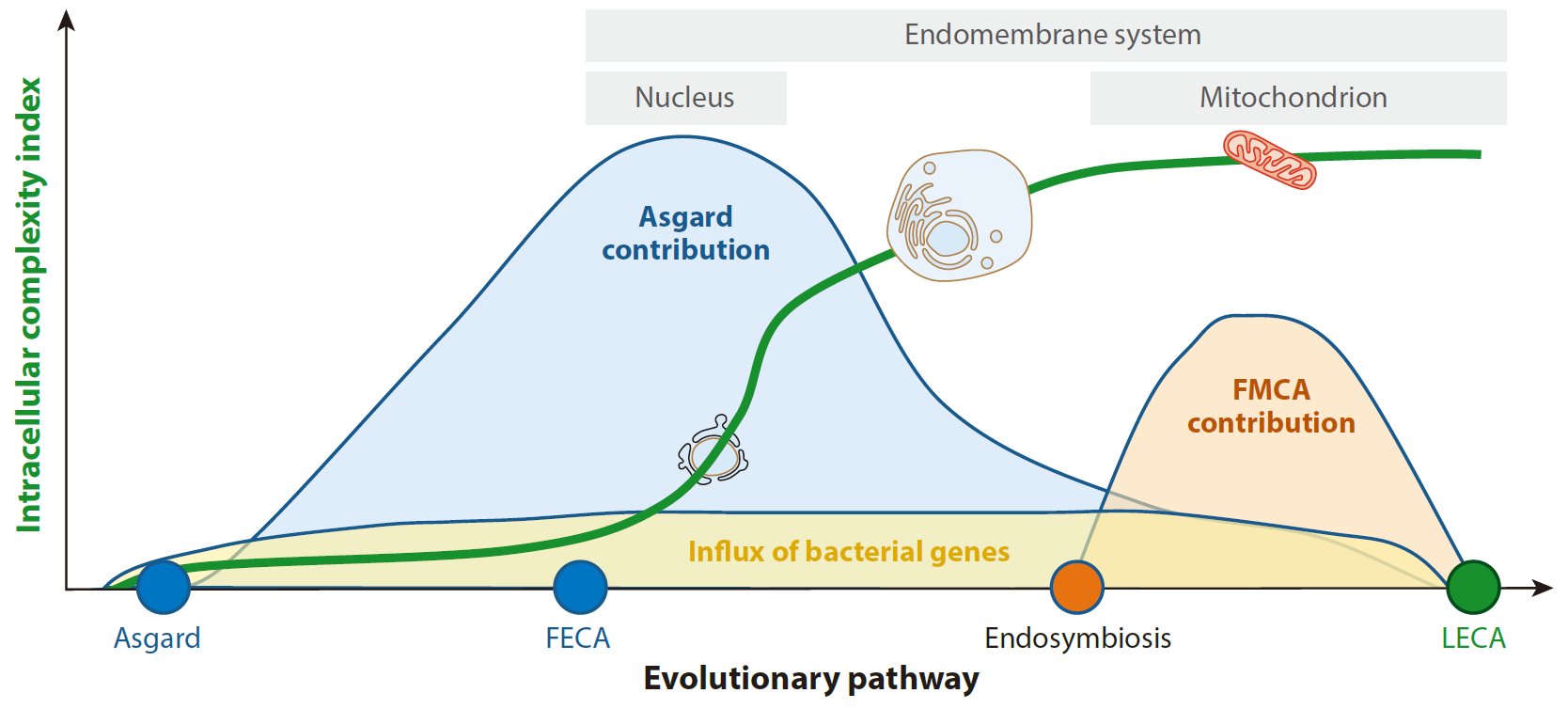
Figure 1. Proposed evolutionary process of eukaryotic endomembrane system



